Layer One, Additive Manufacturing That Closes Its Own Loop
3D printing, printer repair and setup, structural modeling, and materials made from what most shops throw away.
The right to create and manufacture belongs in everyone's hands. That is the good half of 3D printing.
The bad half is a mountain of vain knockoffs and waste plastic sitting in landfills. Layer One keeps the first and refuses the second, running the full printing lifecycle while treating its own failed prints and purge as the next spool of filament. Part of the SymbioHaven ecosystem.
Closing the loop is how the right to make defends itself
Access and responsibility are one fight, not two
A technology that puts manufacturing in everyone's hands but buries the world in plastic gets taken away, regulated, restricted, priced back out of reach. So closing the loop is what keeps the printer in your hands.
The failed print becoming the next spool, and the "broken" machine rebuilt instead of replaced, are the same act performed on material and on hardware: a refusal of waste that is also a defense of access. You keep the right to create by proving you create consciously. And when material is recovered instead of bought, iterating stops being expensive, which was the whole promise of the technology to begin with.
What Layer One does
The full lifecycle, from a file to a working machine to a finished model.
Printing & production
From your file, sketch, or scan
Printing objects, prototypes, and short runs, and converting a rough idea into something actually manufacturable, which is the part most services skip.
Printer repair & setup
A rescued machine, made to run
Repair, assembly, calibration, and troubleshooting for printers people already own, including the ones declared broken and given up on.
Materials & filament diversion
Waste as the main ingredient
Diverting filament from internal and outside waste streams and developing alternative materials, clearly labeled as experimental, because that is what it is.
Structural models
The smallest scale of a building
High-precision models for sculptures and architectural designs, the prototype layer for Native Form Communities, which prints homes at building scale.
The work, and the prints
Real pieces off this bench, not stock renders.
The pieces
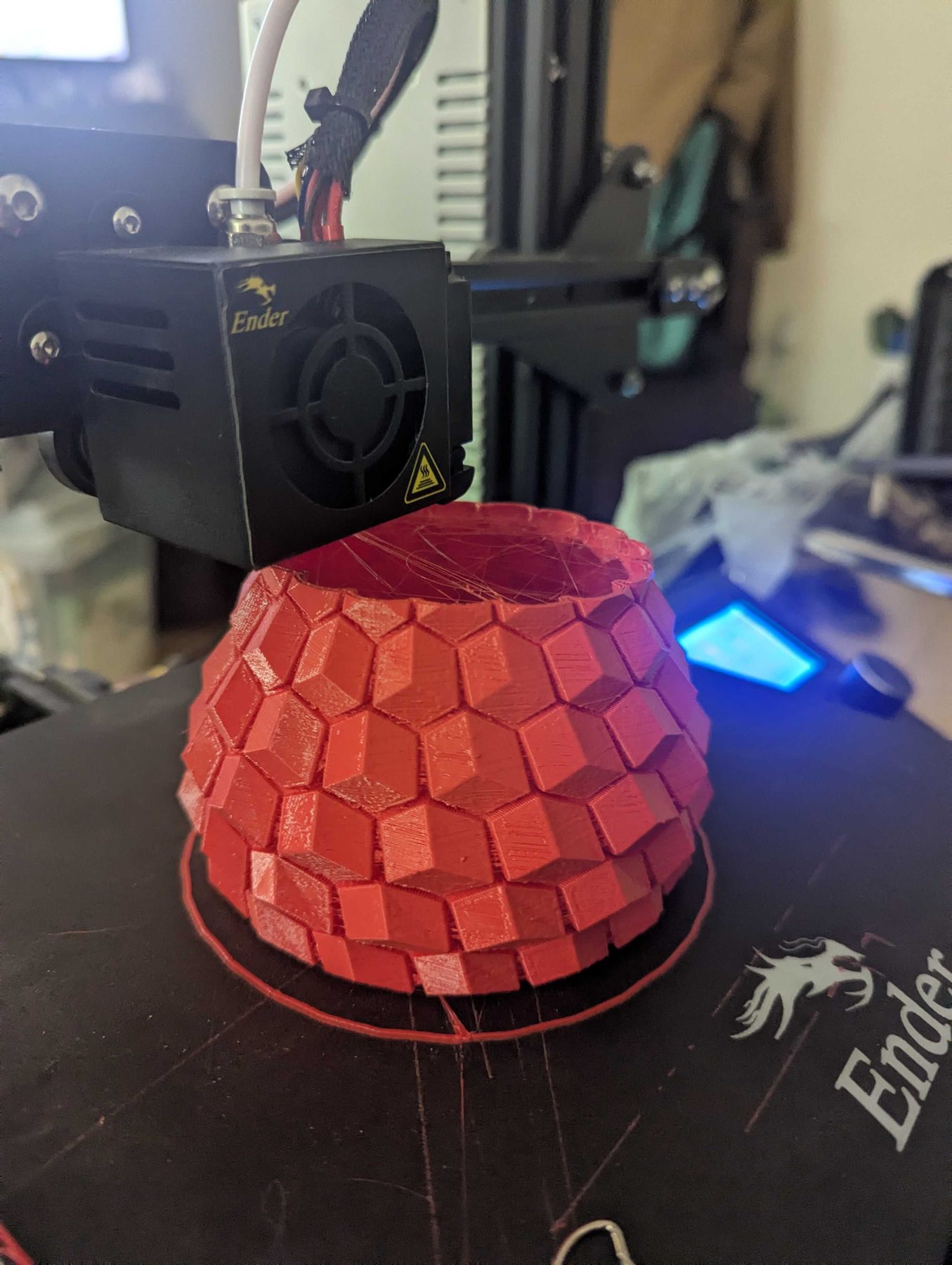
A Voronoi thinker sculpture. A truncated octahedron pen-holder vase, hexagons became honeycombs became the octahedron. A coral design. The sculpture of our solar system, planets orbiting the sun, made for Solara Imprint.
The prints
Every venture in the ecosystem is a print, paw print, blueprint, hand print. The mark a thing leaves is the thing itself, made physical.
The machine
The workhorse is an Ender 3, found being given away as broken, taken apart and rebuilt and re-tuned more times than anyone kept count of, until it ran. That is the repair skill, proven on our own bench first.
The stakes
Showing that printing can be a more conscious way to create, closing its own loop, is also how you keep it from being outlawed. Proving the responsible version defends the right it depends on.
A Glimpse Into the Print Layer
A short video will show design conversion, filament diversion, and a structural model coming off the bed.
Fabrication as a material practice
Layer One treats printing as structural imagination, not disposable prototyping. It is for people who want precision and experimentation without accepting waste as the price of making.
Experimental and recycled filament is genuinely inconsistent, so it is used where that is acceptable and known material is used where it is not, and you are told which is which before the job. Anything with a structural or safety role is printed in known material, full stop. Naming that limit is what makes the rest trustworthy.
Where to start
Start a project
A printing or structural-modeling project that needs design conversion, setup, or production support.
Explore materials
Diverted filament, experimental blends, and alternatives developed from waste streams.
Request support
Printer repair, troubleshooting, or education for running additive manufacturing well.
Start a project · Explore materials · Request support
Connect with Layer One
Send the file, the sketch, or a photo of the printer that stopped working. Tell us what you are trying to make or fix, and you get a real answer back. Use the contact form, or call (512) 808-0153.
Waste → Regeneration