Recurring Pickup Routes in Austin
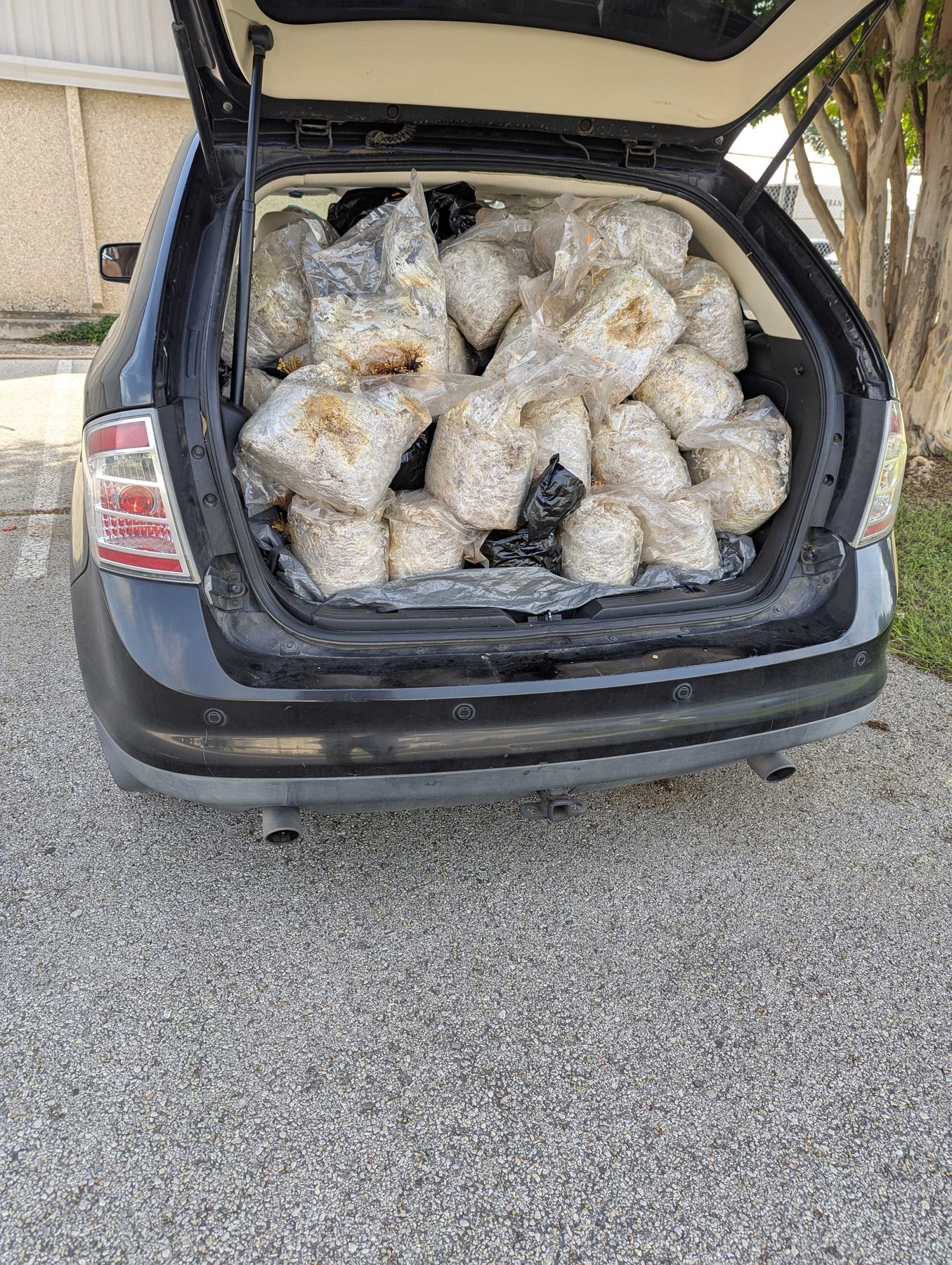
If your business is paying to discard something every week, there is a reasonable chance another business three miles away is paying to buy it.
Coffee grounds. Spent substrate. Produce that did not sell. Flowers after an event. Linens and soft goods. Packaging material. None of it is waste in any real sense. It is material that stopped moving, and it goes to a landfill because no route existed to where it was actually needed.
Wonder Courier builds and runs that route.
How it works
Same day each week, or whatever interval matches how fast it accumulates. Containers we agree on, in a spot that does not interrupt your operation. In and out without anyone on your staff handling it. And it goes somewhere it gets used, rather than to a transfer station.
Where it goes depends on what it is, sometimes ArchiFarm or GroundsVolt inside this ecosystem, sometimes a business outside it that needs exactly what you have.
What we collect
Spent coffee grounds. Spent mushroom substrate and blocks. Produce trim and unsold produce. Post-event flowers. Clean textiles, towels, and linens. Reusable packaging and certain plastics. Usable furniture and fixtures. If you have volume of something and you are not sure whether it counts, ask, the answer is more often yes than people expect.
Why this costs less than what you do now
Two reasons, both structural.
Disposal is priced by volume, and diverted material stops entering that stream. And a route serving several stops on one loop is much cheaper to run than a route serving one, so as the loop fills in, the cost of every stop on it falls. That is the opposite of how logistics normally scales.
Low footprint here means one loop instead of ten separate trips. The vehicle is an ordinary one.
What we are not
Not a waste hauler and not licensed as one. Not freight, parcel, or long-haul. Not a service that can take contaminated or hazardous material.
This is one right-sized vehicle running a well-designed loop, and that constraint is deliberate. National carriers do not collect coffee grounds and freight brokers do not route event flowers to a care community, those routes are unpriced and unserved precisely because they are low-volume and relationship-dependent. A single vehicle is better at those than a fleet is.
Start with one pickup
Before any schedule exists. We come once, see the volume, see the access, and find out what it actually is, because material is almost never quite what it was described as over the phone.
After that you get a real interval and a real number. If the volume does not justify a route, we will tell you, and we will try to point you somewhere that fits.
Who this fits
Cafés and roasters with daily grounds. Restaurants and groceries with produce trim. Mushroom farms with spent blocks. Event venues and florists with post-event flowers. Hotels, gyms, studios, and salons with textiles. Makers and small manufacturers with usable offcuts. Anyone whose disposal invoice is larger than it should be for what is actually in the bin.
What it costs
Priced by volume, interval, and where you sit relative to an existing loop, a stop on a route we already run costs less than one that requires a new leg. Tell us what you have, how much, and how often, and you get a number before anything is scheduled.
CTA: Tell us what you are currently paying to throw away.
Use the contact form, or call (512) 808-0153.
Service → Stewardship